
NEUTERING A DOG
Male dog
A male dog’s sex drive is not always compatible with life as a pet. Some male dogs have very strong instinctive dominant behaviour. A male dog’s instinctive attempts to become pack leader are often perceived as aggressive behaviour and can lead to fights with bite injuries. If the male dog is not intended for breeding, castration can reduce the risk of behavioural problems.
A castrated male dog often finds it easier to adapt to life as a pet. Castration is also recommended in cases such as cryptorchidism. This is a hereditary condition in which one or both testicles have not descended into the scrotum but remain in the inguinal canal or abdominal cavity. The condition increases the risk of testicular cancer.
Castration can be performed on male dogs of all ages, but it is recommended that it is carried out once the dog is fully grown.
A standard castration is performed by removing both testicles through a small incision in front of the scrotum. The incision is then closed with sutures in 2 layers. The skin is often closed with internal sutures, as this is usually less irritating for the dog, and there are no stitches that need to be removed later. The procedure is performed under general anaesthesia, and the dog is given antibiotics and pain relief before waking up.
The male dog remains fertile for up to 30 days after castration and can still mate with a female dog during this period, resulting in pregnancy.
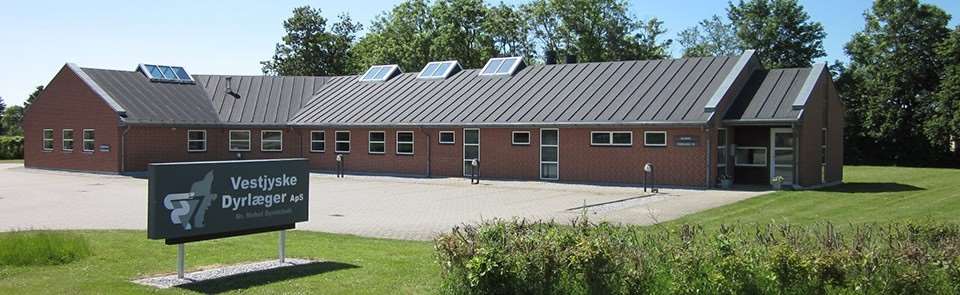
Opening hours
The clinic is open on all weekdays 7.00-17.00
Consultations by appointment
Closed on public holidays, Constitution Day, 24/12 and 31/12
Female dog
Spaying the female dog prevents her from coming into season, having puppies, and becoming falsely pregnant. In addition, it minimises the risk of life-threatening diseases such as pyometra, as well as cancer of the mammary glands and/or ovaries.
Spaying can be performed at any age. However, if the procedure is carried out early, it can reduce the risk of developing mammary cancer. It is estimated that all female dogs have an approx. 25% risk of developing breast cancer, but studies have shown that if spaying is performed before the first season, this risk is reduced to < 1%, and to < 8% if spaying is performed before the second season.
Most female dogs come into their first season at around 6 months of age. However, there are individual differences, so an age range of 5 to 24 months is also considered normal for the onset of the first season. Small dog breeds often come into season earlier than larger dog breeds.
During spaying, both ovaries and the uterus are removed through an incision in the abdominal wall. The incision is then closed in 3 layers. The skin is closed with internal sutures that dissolve on their own. The procedure is performed under general anaesthesia, and the dog is given pain relief before waking up.
The operated dog
We always send pain relief home with the dog, and in isolated cases antibiotics, but this is always assessed on a case-by-case basis.
The dog must be kept calm for 10–14 days after the operation, i.e. walks on a lead and no rough play, agility, or swimming. Dirt in the wound should be avoided. The dog is often tired for about a day after the anaesthetic, but recovers quickly.
The most common side effect is that a neutered dog has a greater tendency to become overweight than an unoperated dog. The dog’s energy requirement after neutering falls to approx. 80% of normal, because the sex drive no longer needs to be maintained. Ad libitum feeding should be avoided, as animals find it difficult to regulate their own food intake, and the dog should be offered regular exercise.
In both sexes, changes in the coat are often seen, which becomes curlier and more “shaggy”. In female dogs, incontinence may also occur.